
Introduction
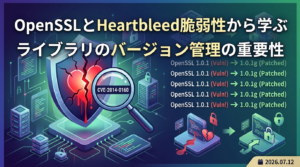
In 2014, Heartbleed (CVE-2014-0160) exposed a hard truth: even the most widely trusted open-source libraries can carry critical flaws for years before anyone notices. A single missing bounds check in OpenSSL put millions of servers at risk, forcing the industry to rethink how dependencies are tracked and maintained. More than a decade later, the underlying problem hasn’t gone away-outdated, unmonitored libraries still sit quietly in production systems. This article revisits Heartbleed’s core lesson and walks through practical tools that help teams catch vulnerable dependencies before they become the next headline.
What Was Heartbleed?
Heartbleed stemmed from a missing bounds check in OpenSSL’s implementation of the TLS Heartbeat extension. A Heartbeat request lets a client send an arbitrary payload along with a declared payload length, and the server is expected to echo it back.
OpenSSL trusted the client-supplied length without verifying it against the actual payload size. A malicious client could therefore claim a payload of up to 64KB while sending only a few bytes, and the server would read-and return-whatever happended to sit in adjacent memory. That memory often contained private keys, session tokens, passwords, and other sensitive data. Because the flaw lived in a core cryptographic library used by roughly two-thirds of active web servers at the time, the exposure was massive and largely undetectable, leaving no trace in standard server logs.
The Root Cause: Outdated and Unmonitored Dependencies
The technical flaw was only half the story. OpenSSL was maintained by a small, under-resourced volunteer team-a common reality for critical open-source infrastructure that few organizations stopped to consider. But the bigger issue sat closer to home: most companies running OpenSSL had no real visibility into which version they were using, let alone a process for tracking new CVEs as they were disclosed. Dependency updates were often manual, infrequent, and reactive, applied only after a public incident forced the issue. Theere was no automated scanning, no dependency inventory, and no clear ownership over patching cycles. Heartbleed didn’t just expose a bug in a library; it exposed how little most organizations actually knew about the software supply chaing they depended on-a gap that, many teams, still exists today.
Lessons Learned
The real lesson of Heartbleed isn’t just “update your libraries”-it’s that dependency management needs clear ownership. Visibility and monitoring tools only help if someone is actually responsible for acting on what they reveal. Too often, tracking third-party libraries falls into a gap between security, DevOps, and engineering teams, with no single owner accountable for patching. Treating dependency management as an ongoing, assigned responsibility-not an occasional cleanup task-is what actually prevents the next Heartbleed. The tools mattee, but only when paired with a team that owns the process.
Practical Tools for Dependency & Vulnerability Management
Dependabot (built into GitHub) automatically scans your dependency manifests and opens pull requests when a newer, patached version is available. It’s free, requires almost no setup, and works well as a first line of defense for teams already libing in GitHub.
OWASP Dependency-Check takes a more audit-oriented approach: it scans project dependencies against the National Vulnerability Database and flags known CVEs by name, making it a solid fit for security teams that need clear, exportable reports rather than automated pull requests.
Snyk sits closer to the commercial end of the spectrum, combining dependency scamming with container and infrastructure-as-code checks, plus prioritized fix suggestions based on exploitability-useful for larger organizations that need vulnerability management across more than just application code.
None of these tools replace ownership. They surface the problem; a team still has to own the fix.
Conclusion
Heartbleed wasn’t a failuere of one library-it was a failure of visibility and ownership across the software supply chain. Tools like Dependabot, OWASP Dependency-Check, and Snyk make it easier than ever to catch vulnerable dependencies early, but they only work when a team is actually accoutable for acting on what they find. The next Heartbleed is likely already sitting in someone’s dependency tree. The question is whether anyone’s watching.








コメント